Quick answer
Uranium and radon both come from uranium-bearing rock, but they need different fixes. Uranium harms you when you drink it, so above the EPA limit of 30 µg/L (ppb), treat drinking water at the tap with reverse osmosis or anion exchange. Radon escapes from water into the air when you shower and wash, so it needs whole-house aeration or carbon treatment. Several states advise action at 4,000 pCi/L; test your indoor air first.
- Best for
- Homes on wells drilled into or near uranium-bearing rock, or in areas where state or county data show uranium or radon in groundwater.
- Wrong fit
- If indoor air radon is high and well water radon is low, fix the air with a soil-gas mitigation system, not water treatment.
- Tradeoff
- Radon needs special sampling and point-of-entry treatment; a kitchen-tap filter does nothing for radon released in the shower.
Two problems from the same rock
Uranium occurs naturally in some rocks and soils. As it breaks down, it produces radon, a radioactive gas. A well drilled into or near these formations can carry dissolved uranium, radon gas, or both. The Vermont Department of Health explains that radon gets into drinking water when a well is drilled into or near rock that contains uranium.
They share a source, but they reach you differently, and that decides the treatment:
| Uranium | Radon | |
|---|---|---|
| What it is | A dissolved radioactive metal | A dissolved radioactive gas |
| How it harms you | Swallowing it | Mostly breathing it after it escapes from water into indoor air |
| Main health concern | Increased cancer risk and kidney toxicity (EPA) | Lung cancer from inhaled radon; also stomach cancer from drinking it over a lifetime (Vermont) |
| Limit or guideline | EPA MCL 30 µg/L (ppb) | No federal limit for wells; 4,000 pCi/L in Maine and Vermont, 5,000 pCi/L in Connecticut |
| Where to treat | Drinking water at the tap | All water entering the house |
Is it a health risk?
Uranium. The EPA’s standard for uranium is 30 µg/L, and its health goal is zero. The EPA lists increased cancer risk and kidney toxicity as the concerns from long-term exposure above the limit. The EPA also sets 5 pCi/L for combined radium-226 and radium-228 and 15 pCi/L for gross alpha (not counting radon and uranium). These are standards for public systems; Minnesota advises well owners to use them as a guide.
Radon. Everyone breathes some radon. Vermont says breathing radon increases lifetime lung cancer risk, with the risk depending on the level, how long you are exposed and whether you smoke. Soil gas is the most common source of radon in a home, but radon released from well water during showers, laundry and dishwashing adds to it. Vermont notes the major danger from radon in water is this release into the air; drinking it over a lifetime also poses a risk of stomach cancer.
How to test
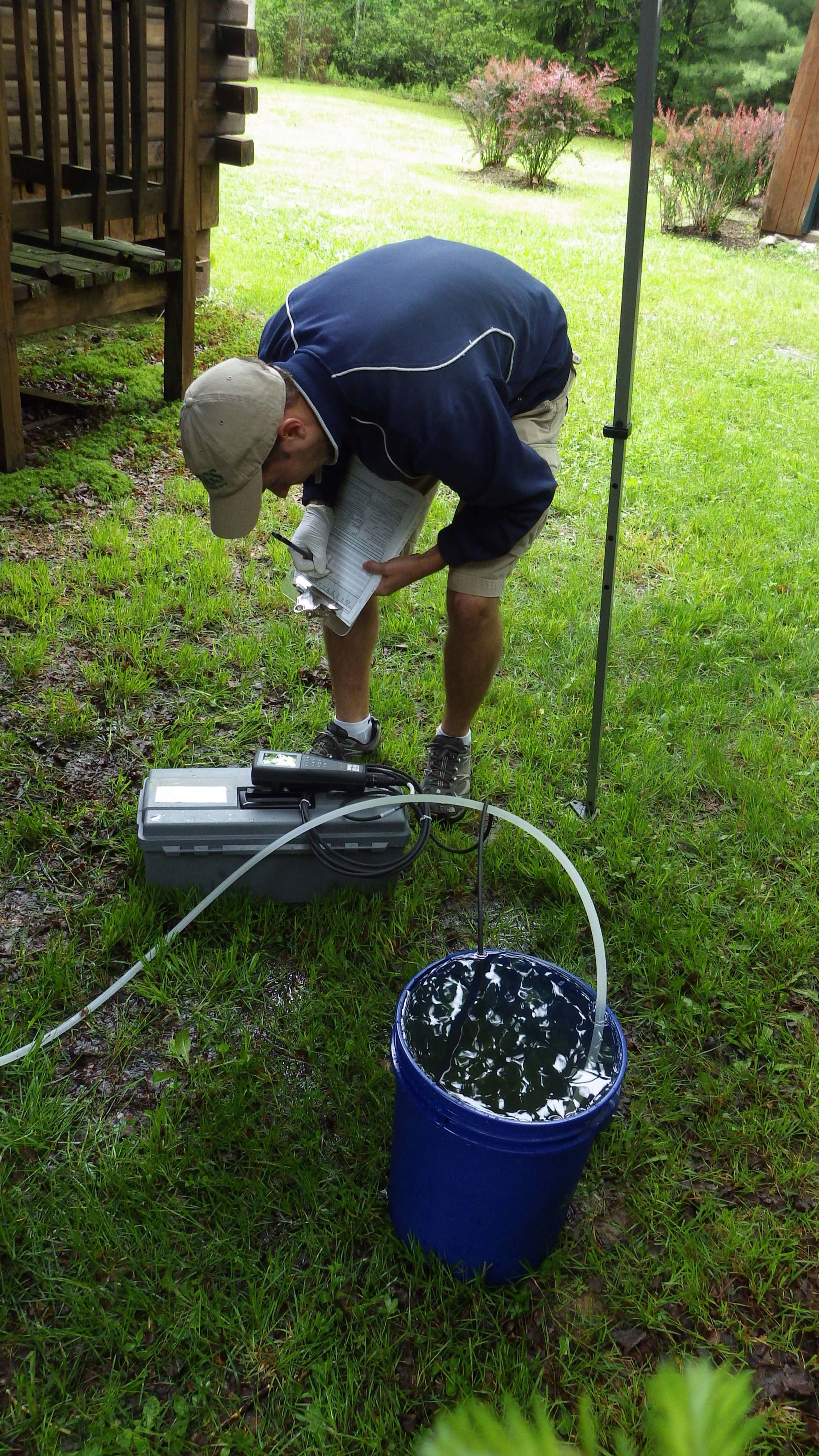
Radon in water needs a special sampling method, because the gas escapes quickly. Use a kit from your state health department laboratory or a certified lab, and follow the instructions exactly. Connecticut bases its action level on the average of two samples drawn at the same time from the same tap, and both Connecticut and Vermont note that results vary over time, so testing more than once can help. Before buying any lab package, check that it lists radon in water specifically.
Radon in air. Vermont advises testing indoor air before deciding whether to treat water, since soil gas is usually the larger source. The EPA action level for radon in indoor air is 4 pCi/L, and Maine suggests considering mitigation between 2 and 4 pCi/L.
Uranium is tested as a metal, reported in µg/L. Ask for gross alpha and radium at the same time if your area has known radionuclides. The guide to testing your well covers sampling, and the test results tool builds a plan from your numbers.
If your result is X, do Y
| Your result | What it means | What to do |
|---|---|---|
| Uranium below 30 µg/L | Under the EPA standard | No treatment needed. Retest if your area has known uranium. |
| Uranium 30 µg/L or higher | Above the EPA standard | Use bottled water for drinking and cooking. Treat the kitchen tap with reverse osmosis or anion exchange, then test the treated water. |
| Radon in water below 4,000 pCi/L | Below the Maine and Vermont guidelines | Vermont says no water treatment is needed; test again in five years. |
| Radon 4,000 to 10,000 pCi/L | At or above state guidelines | Check your air result first. Consider point-of-entry treatment. Carbon or aeration both work in this range, with the cautions below. |
| Radon 10,000 pCi/L or higher | High | Aeration. Connecticut says it is the only effective method at this level, and Maine says to more strongly consider treatment as levels near 10,000 pCi/L. |
| Air radon high, water radon low | Soil gas is the main source | Fix the air with soil-gas mitigation. Water treatment will not help much. |
Connecticut uses 5,000 pCi/L rather than 4,000 pCi/L as its recommended action level. Use your own state’s number where it has one; find your state program under states.
Treating uranium
Uranium is a drinking-water problem, so point-of-use treatment at the kitchen tap is usually enough. Minnesota’s home treatment guide lists reverse osmosis, anion exchange resins and activated alumina media among the technologies designed to remove uranium. Minnesota also notes that ion exchange softeners and RO can reduce some radionuclides.
An under-sink RO system is the simplest fit for uranium above 30 µg/L. SpringWell’s MOEN reverse osmosis system is one under-sink option; its product page does not list uranium specifically, so check the performance data sheet for uranium results or choose a system certified for it, and test the treated water after installation. RO is point-of-use and does nothing for radon. The reverse osmosis guide explains what to look for.
Treating radon in water
Radon has to be removed before water reaches showers, faucets and appliances, so treatment is installed where water enters the house. There are two types, and the state agencies differ on when to use each.
Aeration mixes water with air inside a tank and vents the air and radon outdoors, away from the house. Maine says aeration is the most common system and removes 95 to 99% of radon. Connecticut says aeration is the only effective method for levels at or above 10,000 pCi/L, and notes that iron and manganese must be considered when installing one. Vermont describes the system as using a fan, so it needs power and an outdoor vent.
Granular activated carbon (GAC) traps radon in a carbon bed as water passes through. Maine says GAC reduces radon by 85 to 95% and is typically recommended for levels under 10,000 pCi/L, with the carbon replaced every few years because of radioactive buildup in the tank. Connecticut says GAC works effectively below 10,000 pCi/L but that the carbon eventually saturates and must be replaced on a schedule by a certified professional. Vermont discourages GAC for radon because the radon collected on the filter could create a radiation hazard. If you use GAC, plan for professional handling and disposal of spent carbon.
No SpringWell system on this site is designed for radon. Connecticut recommends a nationally certified radon mitigation professional, Maine advises a registered radon service provider, and Vermont suggests a certified water treatment specialist.
Order of treatment
- If iron or manganese is high, deal with it before or as part of radon aeration, since Connecticut flags it as a factor in aeration design.
- A sediment filter ahead of a GAC radon tank protects the carbon; NDSU notes sediment clogs activated carbon quickly.
- Uranium RO at the kitchen tap goes downstream of everything else.
Maintenance and retesting
- Retest water radon after installing any treatment, as Vermont recommends, and periodically after that.
- Replace GAC on the installer’s schedule, using a professional for removal.
- Clean and service aeration units as the maker requires.
- Retest uranium in treated water after installation and periodically after that.
When to call a pro or the health department
Call your state radon program or health department if water radon is above your state’s guideline, if indoor air is above 4 pCi/L, or if uranium is above 30 µg/L in a home with children. They can recommend certified radon professionals and labs. For other natural contaminants that often show up in the same geology, see arsenic in well water.
Common questions
What is a safe level of radon in well water?
There is no federal limit for radon in private well water. Maine and Vermont use 4,000 pCi/L as their guideline or advisory level, and Connecticut recommends action at 5,000 pCi/L. Check your own state's guidance.
Is radon in well water dangerous to drink?
The main danger is breathing radon released from water into indoor air, which raises lung cancer risk. The Vermont Department of Health says drinking radon over a lifetime also carries a risk of stomach cancer.
What is the EPA limit for uranium in drinking water?
30 µg/L, with a health goal of zero. EPA lists increased cancer risk and kidney toxicity as the concerns from long-term exposure above the limit.
Does reverse osmosis remove radon?
It is not the tool for radon. Radon is released into the air from showers, laundry and dishwashing throughout the house, so it needs point-of-entry aeration or carbon treatment. RO at the kitchen tap is a good fit for uranium.
Aeration or carbon for radon in water?
Maine says aeration removes 95 to 99% of radon and carbon removes 85 to 95%, with carbon typically recommended under 10,000 pCi/L. Connecticut says aeration is the only effective method at or above 10,000 pCi/L, and Vermont discourages carbon because of radiation buildup.
Read next
- Arsenic in well waterArsenic has no taste or smell, so test once. What 10 µg/L means, why arsenic III needs oxidizing first, and when an under-sink RO system is enough.
- Reverse osmosis for well waterWhat an under-sink RO system removes from well water (nitrate, arsenic, lead, uranium), what it misses, the pretreatment it needs and how much water it wastes.
- How to test well waterWhat to test your well for, how to pick a certified lab, and how to take bacteria, lead and raw-water samples so the results are worth acting on.
Sources
- EPA: Radionuclides Rule
- EPA: National Primary Drinking Water Regulations
- Vermont Department of Health: Radon in Drinking Water
- Maine CDC: Radon
- Connecticut Department of Public Health: Radon in Your Well Water (2025, PDF)
- Minnesota Department of Health: Home Water Treatment (PDF)
- Minnesota Department of Health: Radionuclides in Drinking Water
- NDSU Extension: Filtration: Sediment, Activated Carbon, and Mixed Media