Quick answer
PFAS are man-made chemicals you cannot see, taste or smell, so the only way to know is a lab test from a certified lab that analyzes PFAS. The EPA's limits for public water are 4.0 parts per trillion each for PFOA and PFOS. If your well is above that, use bottled or filtered water for drinking, cooking and infant formula, and choose a filter certified under NSF/ANSI 53 or 58 for PFAS reduction. Test before you buy any PFAS system.
- Best for
- Homes near airports, military bases, firefighting training areas, industrial sites or landfills, and anyone who wants to know before choosing treatment.
- Wrong fit
- If you already have a recent PFAS result from a state investigation, skip ahead to treatment and work with your state agency on it.
- Tradeoff
- PFAS samples must be collected carefully, results are in parts per trillion, and current filter certifications do not yet prove removal down to the EPA limits.
What PFAS are
PFAS (per- and polyfluoroalkyl substances) are a large family of man-made chemicals used for decades in firefighting foam, non-stick cookware, food packaging and industrial processes. The Minnesota Department of Health notes they are extremely stable and do not break down in the environment, which is why they are called “forever chemicals.” You cannot see, taste or smell them.
Are private wells affected?
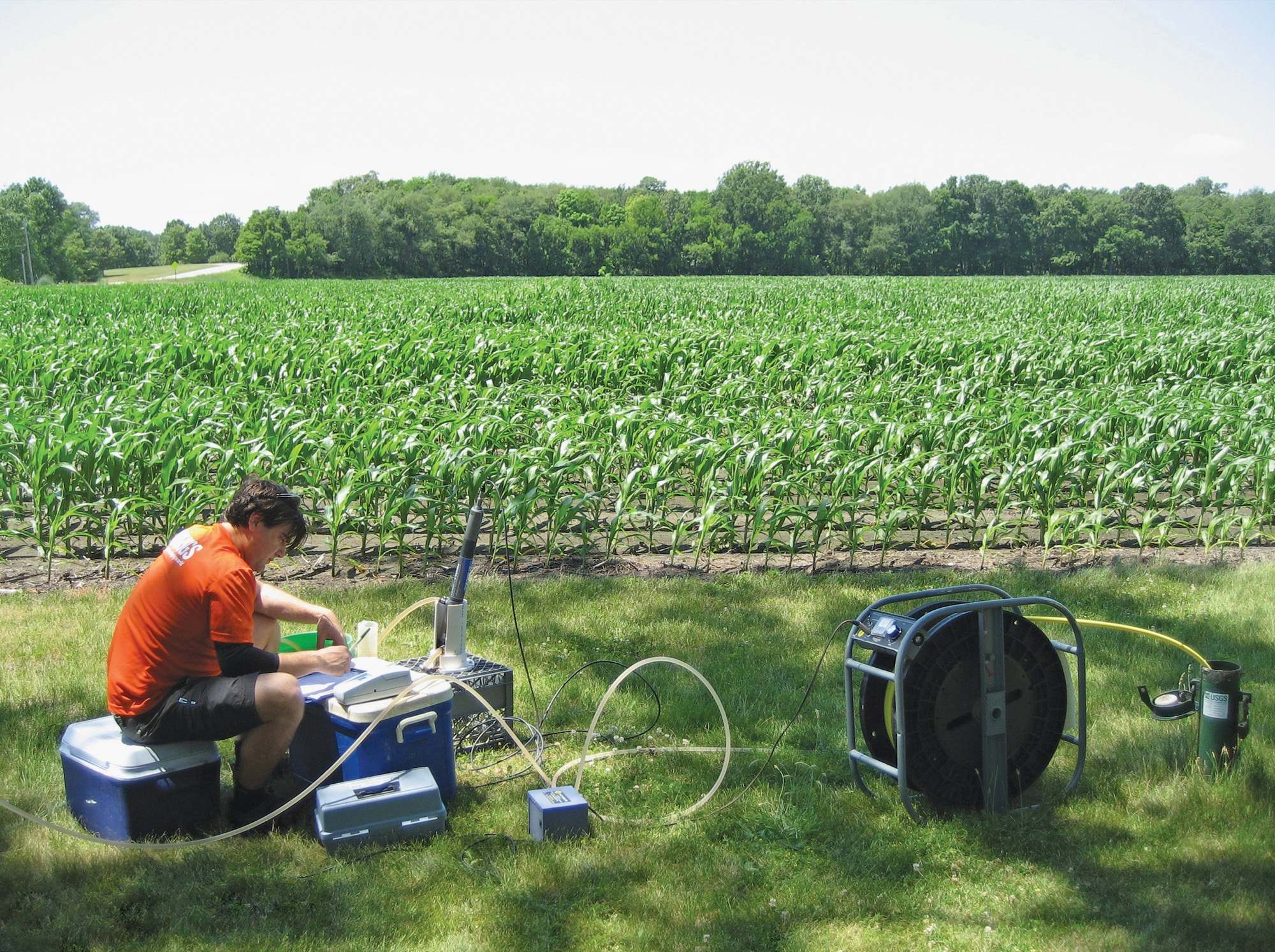
Yes, about as often as city water. A USGS study tested tap water at 716 locations from 2016 to 2021, including private wells, and estimated that at least 45% of the nation’s tap water has one or more PFAS. It found PFAS concentrations similar between public supplies and private wells. The USGS tested for 32 PFAS; there are more than 12,000 types, and not all can be detected with current tests.
Location matters. The USGS saw the most exposure near urban areas and known PFAS sources such as industry and waste sites, and estimated the probability of no PFAS being found in tap water at about 75% in rural areas and about 25% in urban areas. Wells at higher risk include those near:
- Airports, military bases and fire training areas where firefighting foam was used.
- Factories that made or used PFAS.
- Landfills and waste disposal sites.
Some states investigate known contamination sites and sample nearby private wells. In Minnesota, for example, the state pollution agency notifies owners whose wells may be affected and samples wells in its investigations. Check your state’s program under states before paying for a test.
Is it a health risk?
Minnesota summarizes the research: higher PFAS exposure has been associated with higher cholesterol, changes in liver function, reduced immune response, thyroid disease and, for PFOA, increased kidney and testicular cancer. It also notes that more work is needed to confirm cause and effect. The EPA has set health goals of zero for PFOA and PFOS.
Infants are a particular concern. Minnesota advises preparing infant formula with filtered tap water or bottled water if your private well has not been tested for PFAS.
The EPA limits, as of November 2026
In April 2024 the EPA finalized drinking water limits for six PFAS. They apply to public water systems, not private wells, but they are the best yardstick for a well result:
| PFAS | 2024 limit (MCL) | Status as of 2026 |
|---|---|---|
| PFOA | 4.0 parts per trillion (ppt, or ng/L) | EPA’s May 2026 proposal keeps this limit, with an option for systems to request until 2031 to comply |
| PFOS | 4.0 ppt | Kept in the May 2026 proposal |
| PFHxS | 10 ppt | Proposed for rescission in May 2026 |
| PFNA | 10 ppt | Proposed for rescission |
| HFPO-DA (GenX) | 10 ppt | Proposed for rescission |
| Mixtures of PFHxS, PFNA, HFPO-DA and PFBS | Hazard Index of 1 | Proposed for rescission |
A proposal is not a final rule, and EPA’s stated reason for the rescission proposal is procedural, not a new finding that these chemicals are safe. For a private well, it is reasonable to treat any of these above their 2024 levels as a reason to act, and to ask your state health department what it recommends.
Note the units. 4.0 ppt is 4.0 nanograms per liter, a thousand times smaller than the µg/L units used for arsenic. Some labs report PFAS in ng/L, others in ppt; they are the same.
How to test
Use a state-accredited laboratory that analyzes PFAS in drinking water. Minnesota tells well owners to contact the lab directly about the number of samples, collection and shipping. PFAS are in many everyday products, so follow the lab’s instructions closely to avoid contaminating the sample.
A good PFAS test reports a list of individual compounds with a reporting limit for each. Make sure it includes at least PFOA, PFOS, PFHxS, PFNA, GenX and PFBS so you can compare against the table above. A certified-lab mail-in test such as Tap Score’s well water tests is one option; confirm the package you choose includes PFAS before you order. The guides to testing your well and well water test kits explain what to ask for, and the test results tool builds a plan from your numbers.
If your result is X, do Y
| Your result | What it means | What to do |
|---|---|---|
| Not tested, near a known or likely source | Unknown risk | Test. In the meantime, use filtered or bottled water for infant formula. |
| Not detected | No PFAS above the lab’s reporting limit | No treatment needed. Retest if a new source appears nearby or your state recommends it. |
| Detected, PFOA and PFOS below 4.0 ppt, others below 10 ppt | Below the EPA yardsticks | Optional. A certified point-of-use filter for drinking water is a reasonable precaution, especially with infants. |
| PFOA or PFOS at or above 4.0 ppt | Above the EPA limit | Use bottled or certified-filtered water for drinking, cooking and formula. Install a filter certified for PFAS. Contact your state health department. |
| PFHxS, PFNA or GenX at or above 10 ppt | Above the 2024 limits now proposed for rescission | Treat drinking water as above, and ask your state for current guidance. |
| Much higher levels, or a state advisory | Significant contamination | Work with your state agency on treatment or an alternative source. Consider point-of-entry treatment. |
Treatment options
The EPA says granular activated carbon, ion exchange and reverse osmosis point-of-use systems studied can greatly reduce PFAS levels. Minnesota’s home treatment guide lists reverse osmosis among the technologies that remove PFAS and notes an MDH study found GAC filters effective.
| Option | How it works | Notes |
|---|---|---|
| Reverse osmosis (point of use) | A membrane separates PFAS from drinking water | Needs filter and membrane changes. The EPA notes it sends about a gallon to the drain for every gallon treated. |
| Granular activated carbon | Porous carbon traps PFAS as water passes through | Limited capacity; replace on schedule. Available as point-of-use or whole-house units. |
| Ion exchange resin | Resin beads attract and hold PFAS | Limited capacity; replace on schedule. |
| Whole-house (point-of-entry) systems | Treat all water entering the home | Minnesota notes both point-of-use and point-of-entry options exist. Pretreat well water for sediment and other problems so the media lasts. |
Certification. The EPA advises looking for certification under NSF/ANSI 53 or NSF/ANSI 58 for PFAS reduction, checking which PFAS a product is certified for in NSF’s listings, and confirming with the manufacturer. The EPA also cautions that certification standards, as of April 2024, did not yet show that a filter removes PFAS down to the new EPA limits. Maintenance matters too: the EPA says filters only work if they are replaced on the manufacturer’s schedule.
Well water pretreatment. NDSU Extension notes that sediment clogs activated carbon quickly and recommends a sediment filter ahead of any carbon unit. If your well also has iron, manganese or hardness, those are usually treated upstream of a PFAS system.
SpringWell sells a whole-home PFAS Water Filter System. Its product page says it reduces PFAS to non-detect levels below 1 ng/L at every tap, and lists a 7 GPM flow rate for 1 to 5 bathrooms with replaceable cartridges. The product page does not name a specific certification, so check NSF’s listings for the exact model and the specific PFAS it covers before relying on it. For most well owners, the order is the same: test first, then size treatment to the result. The reverse osmosis guide covers the most common point-of-use option.
Maintenance and retesting
- Replace carbon, resin cartridges and RO membranes on the maker’s schedule. PFAS give no warning when a filter is exhausted.
- Test the treated water after installation, and periodically after that, to confirm the filter is working.
- Keep a copy of your results; they are useful if a state investigation later reaches your area.
When to call the health department
Call your state health department or environmental agency if PFOA or PFOS is at or above 4.0 ppt, if you live near a known PFAS site, or if you are pregnant or have an infant. They can explain current guidance and may know about state testing or treatment assistance programs.
Common questions
How do PFAS get into well water?
PFAS have been used in firefighting foam, non-stick cookware, food packaging and industry. The USGS found the most exposure near urban areas and known sources such as industry and waste sites.
What is the EPA limit for PFAS in drinking water?
The 2024 rule set 4.0 ppt each for PFOA and PFOS, plus limits for four other PFAS. In May 2026 EPA proposed keeping the PFOA and PFOS limits and rescinding the others. These rules apply to public systems, not private wells.
How common is PFAS in private wells?
A USGS study estimated at least 45% of US tap water has one or more PFAS and found similar concentrations in private wells and public supplies. Detections were more likely near urban areas and known sources.
Do whole-house filters remove PFAS?
They can. The Minnesota Department of Health notes both point-of-use and point-of-entry options exist. The EPA's certification guidance centers on point-of-use filters, so check any whole-house unit's listing carefully.
Should I make baby formula with well water if I have not tested for PFAS?
Minnesota advises preparing infant formula with filtered tap water or bottled water if your private well has not been tested for PFAS.
Read next
- Reverse osmosis for well waterWhat an under-sink RO system removes from well water (nitrate, arsenic, lead, uranium), what it misses, the pretreatment it needs and how much water it wastes.
- How to test well waterWhat to test your well for, how to pick a certified lab, and how to take bacteria, lead and raw-water samples so the results are worth acting on.
- Well water test kits comparedState-certified lab testing vs Tap Score mail-in tests vs SpringWell's well test kit, plus what DIY test strips can and can't tell you about your well.
Sources
- EPA: Per- and Polyfluoroalkyl Substances (PFAS) drinking water regulation
- EPA: Identifying Drinking Water Filters Certified to Reduce PFAS
- USGS: Tap water study detects PFAS 'forever chemicals' across the US
- Minnesota Department of Health: PFAS and Private Wells
- Minnesota Department of Health: Home Water Treatment (PDF)
- NDSU Extension: Filtration: Sediment, Activated Carbon, and Mixed Media
- SpringWell: PFAS Water Filter System product page